
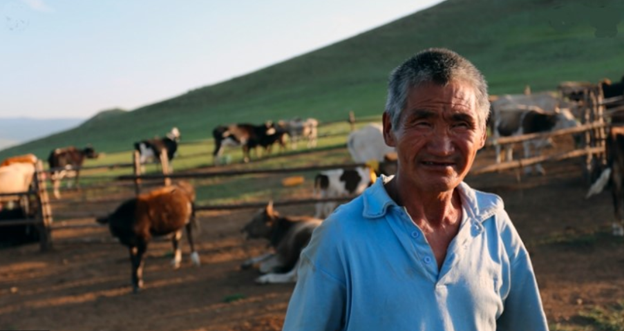
Mongolia & butter culture:
When we hear the word Mongol, the first thing that comes to mind is the name Genghis Khan and of course, the powerful Mongol Empire from around 1206 to 1368. Obviously, Mongol tribes existed long before and still do to this day, albeit in different social and political circumstances and shapes.
Dairy products were and still are a major part of the Mongol diet. Butter was made and stored in leather pouches. Instead of salting it, they gave butter a longer shelf life by boiling it.

Cow’s milk butter is a very important product in the cuisine and daily life of the people of Inner Mongolia, who are cattle farmers.
In this part of the world, butter is the fat used for cooking, but it is also added to tea or used to make a fried butter cake. It is also eaten with snacks or used as a filling for steamed bread.
It is offered to Buddha or taken to the Oboo. Oboos are votive areas made of piles of stones and pieces of wood, where, in the Mongolian shamanic religion, offerings are made.
It plays a role during religious celebrations, as well as on other occasions, such as weddings or birthdays.
As the colour white is a symbol of purity and sacredness in Mongolia, white butter is considered a symbol of good luck and well-being. The people in this area usually receive guests with a sacred ritual: milk-based food and drinks are offered to wish them well.
Another quick look back at butter in the past: The Sumerians!
Sumer was an ancient civilization (c. 4500 – c. 1900 BC) founded in the Mesopotamia region situated between the Tigris and Euphrates rivers which is now mostly part of Iraq.
Known for their innovations in language, governance, architecture and more, Sumerians are often considered the creators of civilization as we understand it.
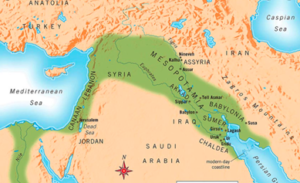
Mesopotamia
The Bagdad museum houses Sumerian tablets from 2500 BC, which refer to the butter fabrication process. It describes a scene where cows were milked, and the milk was turned into butter in large jars that were rolled.
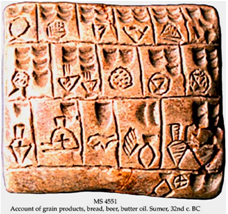
Example of a Sumerian tablet
The butter-making process
Unhomogenized milk and cream contain butterfat in the form of microscopic globules. These globules are surrounded by membranes made of phospholipids (fatty acid emulsifiers) and proteins, which prevent the fat in milk from pooling together into a single mass. Butter is produced by agitating the cream to damage these membranes and allow the milk fats to agglomerate, separating from the other parts of the cream.
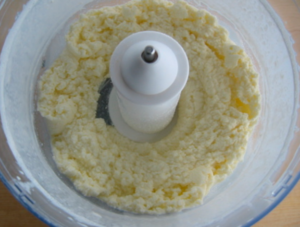
View of butter grains when churning cream in a food processor.
Variations in the production method will create butters with different consistencies, mostly due to the butterfat composition in the finished product. Butter contains fat in three separate forms: free butterfat, butterfat crystals and undamaged fat globules. In the finished product, different proportions of these forms result in different consistencies within the butter; butters with many crystals are harder than butters dominated by free fats
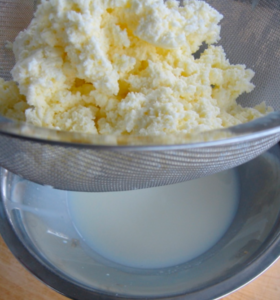
Churning produces small butter grains floating in the water-based portion of the cream.
The buttermilk is drained off; sometimes, more buttermilk is removed by rinsing the grains with water. Then the grains are pressed and kneaded together. Commercial butter is about 80% butterfat and 15% water; traditionally made butter may have as little as 65% fat and 30% water
Cultured butter!
Before modern factory butter-making, cream was usually collected from several milkings and was, therefore, several days old and somewhat fermented by the time it was made into butter.
Butter made from fermented cream is known as cultured butter. During fermentation, the cream naturally sours as bacteria convert milk sugars into lactic acid. The fermentation process produces additional aroma compounds, including diacetyl, which makes for a fuller-flavoured and more “buttery” tasting product. Today, cultured butter is usually made from pasteurized cream whose fermentation is produced by the introduction of Lactococcus and Leuconostoc bacteria.
Sweet cream butter!
Butter made from pasteurized fresh cream is called sweet cream butter. Throughout continental Europe, cultured butter is preferred, while sweet cream butter dominates in the United States and the United Kingdom.